Iron Goddess Oolong Tea: Unraveling the Mystique of Tie Guan Yin

Myth & mist-shrouded mountains: Iron Goddess Oolong’s secrets unfold.
Continue reading
Myth & mist-shrouded mountains: Iron Goddess Oolong’s secrets unfold.
Continue reading
In the serene hills of Hangzhou, China, lies a place where centuries-old traditions meet the lush embrace of nature. Here, amid mist-covered mountains and tranquil lakes, Dragonwell Green Tea, also known as Longjing tea, is cultivated with love and care. This exquisite tea has captured the hearts of tea connoisseurs worldwide, not only for its exceptional taste but also for its rich history and cultural significance. In this blog, we’ll embark on a journey to explore the enchanting world of Dragonwell Green Tea.
A Glimpse into Dragonwell’s History
Dragonwell Green Tea traces its origins back to the Tang Dynasty, around the 7th to 10th centuries AD. Legend has it that Emperor Qianlong of the Qing Dynasty was so enamored with the tea’s taste and aroma that he declared the Dragonwell Village and its tea as a tribute. This royal endorsement played a pivotal role in popularizing Dragonwell Green Tea across China and beyond.
The Tea Gardens of Hangzhou
The pristine environment in which Dragonwell tea is cultivated plays a significant role in its exceptional quality. The tea gardens in Hangzhou are characterized by their lush greenery, gentle slopes, and the proximity of the West Lake, which creates a unique microclimate that nurtures the tea bushes. The carefully tended tea bushes thrive in this environment, producing tea leaves that are nothing short of extraordinary.
The Art of Harvesting
The art of harvesting Dragonwell Green Tea is a meticulous process that requires a skilled hand. Traditionally, tea pluckers handpick the tender, young tea leaves and buds in early spring. These leaves are characterized by their distinctive flat shape and vibrant green color. The timing of the harvest is crucial, as it impacts the flavor and aroma of the tea. Dragonwell tea leaves are typically harvested before the Qingming Festival, a Chinese holiday that falls in early April.
The Unique Processing Method
Once harvested, Dragonwell tea leaves undergo a unique and time-honored processing method. The leaves are first withered in the sun to reduce moisture content and develop their characteristic shape. Afterward, the leaves are skillfully pan-fired in large woks, a step known as “kill-green.” This process halts oxidation and preserves the tea’s vivid green color. Finally, the leaves are meticulously hand-rolled to achieve their iconic flat shape, resembling the blade of a sword.
The Taste of Dragonwell Green Tea
The exquisite craftsmanship that goes into producing Dragonwell Green Tea results in a drink that is truly a sensory delight. Its flavor is often described as sweet and nutty, with a hint of chestnut and a pleasant vegetal undertone. The aroma is fresh and invigorating, reminiscent of the verdant tea gardens where it’s cultivated. Dragonwell’s taste profile is both subtle and complex, making it a favorite among those who appreciate the nuanced flavors of fine green tea.
Brewing Dragonwell Tea
To fully savor the nuances of Dragonwell Green Tea, it’s essential to brew it with care. Here’s a simple guide:
Dragonwell Green Tea is not just a beverage; it’s a symbol of tradition, craftsmanship, and the harmonious coexistence of humanity and nature. As you savor a cup of Dragonwell, you are not only indulging in a delightful drink but also immersing yourself in the rich tapestry of Chinese tea culture and history. So, the next time you seek solace and tranquility, consider brewing a cup of Dragonwell Green Tea and letting its essence transport you to the misty hills of Hangzhou, where time slows down, and nature’s beauty reigns supreme.
Check it out https://cupoftea-oregon.com/product/loose-leaf-tea/green-tea/dragonwell/

As time moves forward more and more of us are learning the benefits of reusing, recycling, and living reciprocally with nature. As it happens, used tea leaves are another wonderful resource that can benefit not only the planet, but you too! From the garden, to your cleaning supplies, and even back in the kitchen there are many brilliant methods most of us can use at home. So instead of washing them down the drain or sending them to the landfill, read on to learn some of the many ways you too can reclaim what would be wasted.
The first and simplest method a shocking number of people aren’t aware of, is to steep your leaves again! Not all teas can be steeped again after their first use, but some (like pu-erh) can be steeped up to 10 times! Some pu-erhs even provide additional flavors after the first steeping as the compressed tea opens up. I’ve also been known to simply leave my previous batch in the tea steeper as I make a different cup, even if it’s not a prolific re-steepable tea a hint of Silver Needles in my next cup of Jasmine can be quite nice. You can also reuse tea leaves in cooking as well. I love to save all my vegetable scraps in the freezer and make a nice broth out of it once I have enough, and tea leaves can be an excellent addition. You’d be surprised how many recipes you can find online that use old tea leaves; like stir-fry’s, ferments, soups, and even salads.
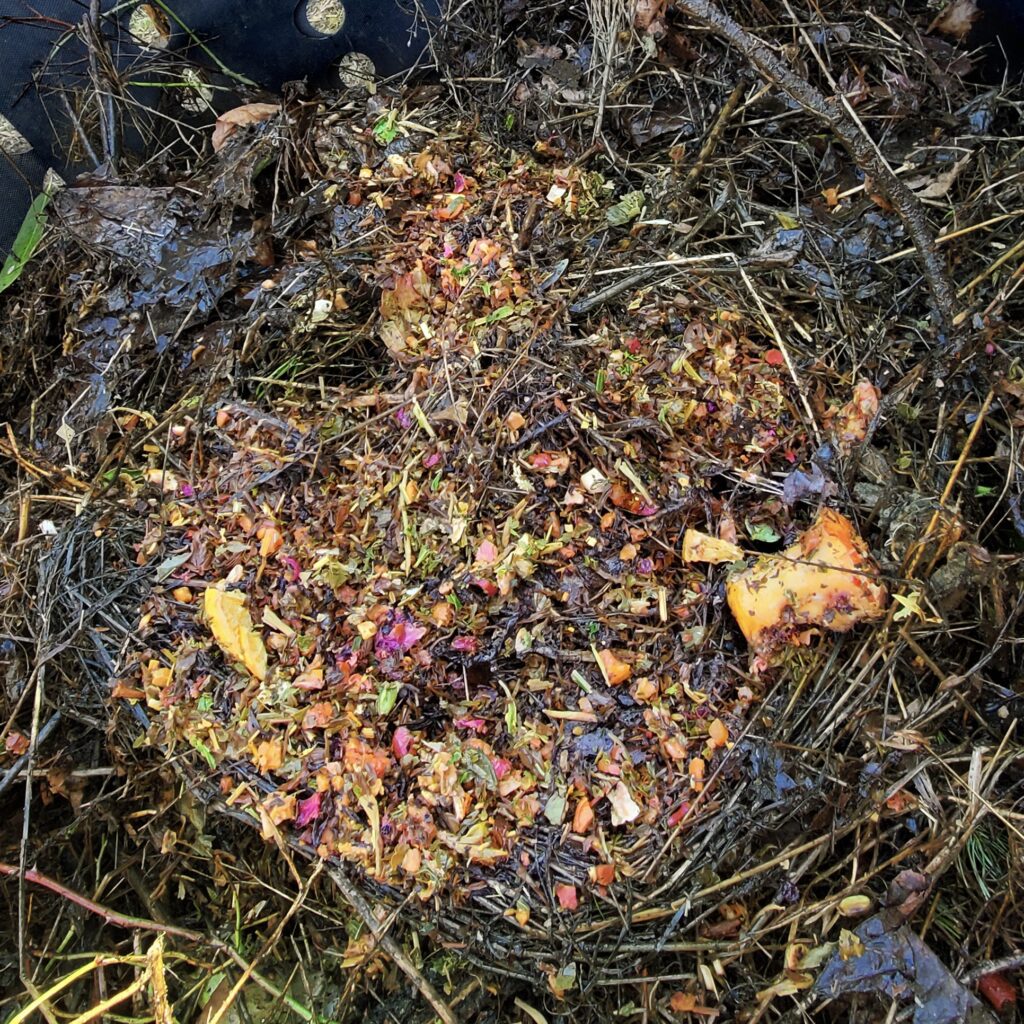
Tea is a fantastic source of nitrogen and other nutrients for the garden, especially green teas. Nitrogen is something lots of plants love, and many gardeners and farmers struggle to get enough of it. You can even save a little money on fertilizer by supplementing a bit of used tea leaves. Cup of Tea has all of their used leaves composted to reduce waste, and many of us can do that at home too. Make sure you have plenty of carbons (dead stuff like dried leaves, dried grass, or cardboard) to mix your tea leaves with to avoid any foul odors. You should have anywhere between 1-3 and 1-30 ratio of nitrogen (like tea leaves and vegetable scraps) to carbons, so as long as your compost is mostly “browns” (carbons), you should be fine. If you don’t have the space to compost, there are plenty of other options as well! You can use it directly on some plants as a mulch. Just remember that tea is usually acidic, and not every plant will benefit from it. Some examples of plants native to the Pacific Northwest that love an occasional tea mulch are roses, rhododendrons, and ferns. Mulch has the benefit of not only providing nutrients over time, but it also helps to maintain moisture. Tea leaves can also repel lots of pests like cats, rodents, and some insects. Burnt tea leaves can even repel mosquitoes! Some people like to boil their tea leaves for a long time (~30 minutes) and use the water after it’s cooled in a watering can. There is such a thing as too much fertilizer though, so don’t do this every time but instead as an occasional treat for your plants.
Used tea leaves also have excellent cleaning and deodorizing properties. If you allow your used green tea leaves to dry out; you can use it to deodorize your refrigerator, oven, wardrobe, or even your shoes. Simply find an adequate container for the application, for shoes use dried tea bags or dump loose leaves in a small mesh bag. Used black tea can be boiled in water for 30 minutes (the more concentrated the better) and the cooled liquid makes a great cleaner for windows, wooden surfaces, and wooden flooring. Once cooled down soak a rag in the tea water, wring out the excess liquid, and wipe down the aforementioned surfaces.
These are just a few different methods hopefully some of us can employ at home to reuse such a wonderful resource. There are even more options out there such as beauty, bathing, art, and divination that aren’t mentioned in this article. If none of these methods work for you, many of us still have access to community compost bins or local farmer markets where someone may take your tea and other organic waste to reuse what you aren’t able to. The possibilities are limitless, so when you finish your Cup of Tea it doesn’t have to end there. ~Tara and Dillan
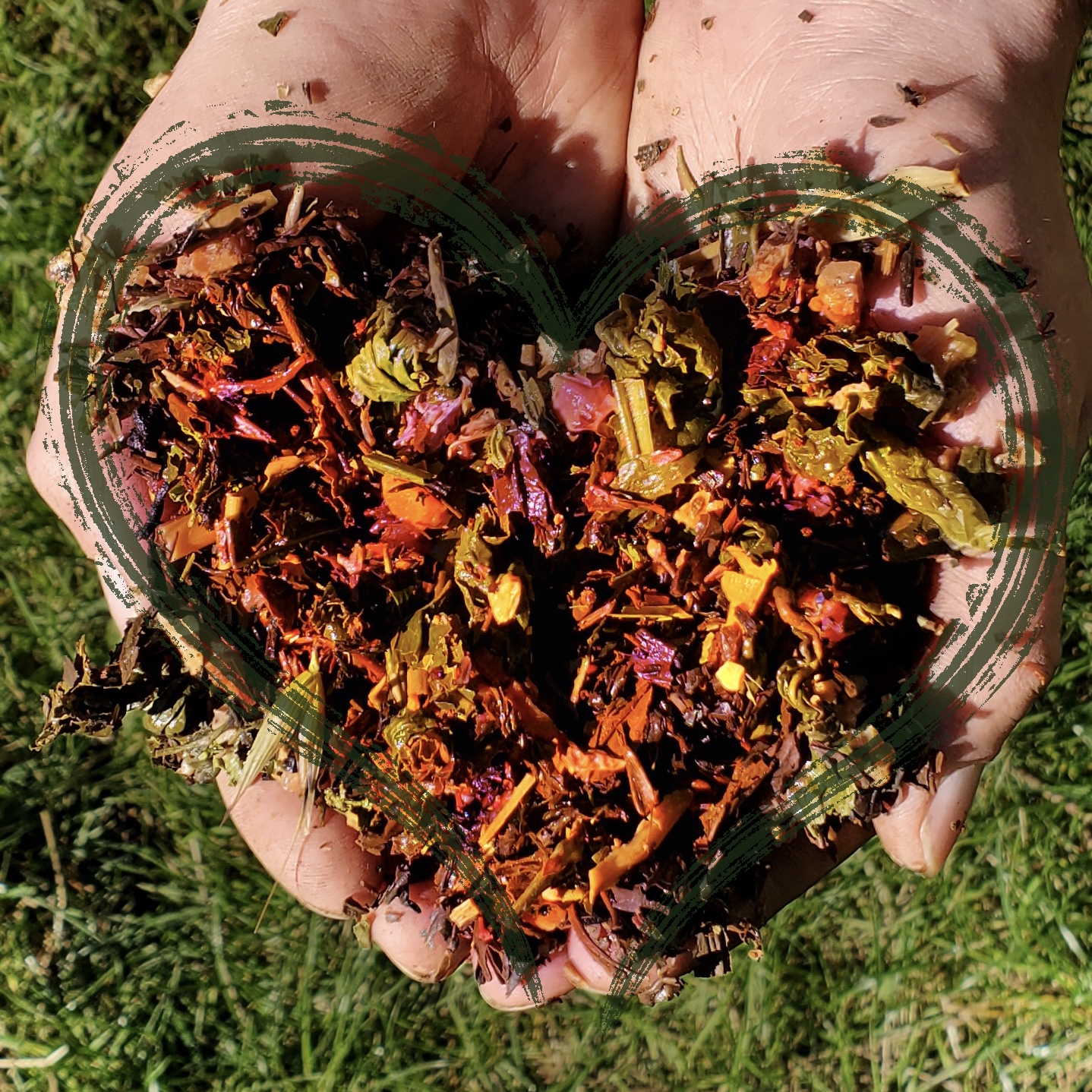

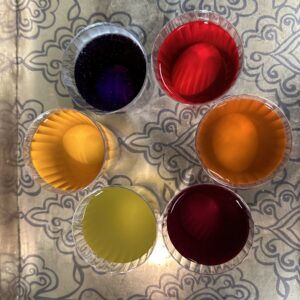
Skip the grocery store and artificial dyes and come by Cup of Tea for natural alternatives. Using tea to dye your Easter eggs gives a more earthy hue, saves your hands and clothes from getting stained by any dyes, and you can still eat the eggs afterward!
What You’ll Need
How to Dye Eggs With Tea


Choose tea over dyes this year, and tag us in your efforts @cupofteaoregon

ONIGIRI with DARJEELING INFUSED RICE
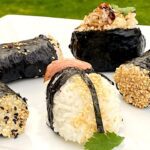 Onigiri is considered Japanese soul food and compared to easy grab ‘n go foods like burritos and hotdogs because they share the same definition for perfect hand-held, walk-about snacks. Onigiri is a rice ball, typically wrapped in seaweed. It was invented before the existence of refrigeration as a way of preserving fresh rice with pickled fillings so it could carry along with people traveling, for soldiers on foot, and farmers working in the fields. Onigiri is still one of the most popular snacks in Japan and is enjoyed by people of all ages. In some regions of Japan, onigiri is also called omusubi, which is associated with Japanese folklore and specifically refers to the triangle formed onigiri. The rice is squeezed into a “mountain shape” as a symbol and hope to receive the power of God. History shows that travelers carried these triangle-shaped snacks with them as a way of requesting safe travels from the spirits who inhabited nature. From what I understand, only
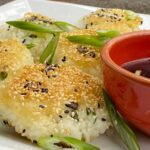 this shape is called omusubi. The word onigiri comes from nigirimeshi which translates “to squeeze.” Squeezing is the technique used to form the rice into a shape that binds it together. I was thankful to learn about this because some of the onigiri I made, were definitely NOT triangles.
Onigiri is most often eaten cold or at room temperature, however, you can serve them warm by simply toasting your shapes in a pan with sesame oil on medium heat for 5-6 minutes per side. This preparation is called yaki onigiri (the recipe can be found at this link ; https://pepperandsaltkitchen.com/2023/02/25/onigiri-japanese-rice-balls/
It takes some practice to get the same perfect little parcels a seasoned onigiri chef creates. As you can see, mine are not perfect, so I’m practicing! With so many shapes to choose from and so many fillings to consider, it’s a fun family activity or one you might consider for a party. There are also onigiri molds you can buy to make the crafting a little easier. I’ve listed one below. You can find more on Amazon and in Asian markets.
Makes 8 -10 pieces
INGREDIENTS FOR ONIGIRI
Dipping sauce: Place rice into a medium-sized sieve and run cold water over it, rubbing the rice between your fingers. Continue to do this until the water runs clear out of the sieve. In a medium size saucepan, add rice and cover with 2-1/2 cups of steeped Darjeeling tea. Bring to a boil, cover with lid, reduce heat to low, and simmer for approximately 10 minutes or until the tea has been completely absorbed. Cut nori sheets into one-inch or two-inch wide strips and set aside. Prepare your fillings and garnishes while the rice is cooking.
An approximate teaspoon of any filling goes in the center of each form, so you only need very small amounts of each.
When the rice is cool enough to handle and you have your assembly board set up with fillings, garnishes, and cut nori sheets, you can begin. Wet your hands with cold water and a tiny pinch of salt and with 1/3 cup (or more) of rice begin molding your shape in the palm of your hand. Squeezing the rice until it’s in a tight form. This can be a ball, cone, triangle, square, or oval. Once you have a shape, make a dip in the middle of the shape and spoon in 1/2 to 1 whole teaspoon of filling. How much filling you put in will depend on how big your shape is. Because of my skill level at this point, I found that adding just a little more rice to cover the filling was required. If you do this, squeeze your shape again to tighten the additional rice. Add nori to the shape, leaving a bit of the rice showing. You can use a tiny bit of water on the end of the nori to get the nori to “glue” together, if necessary. Sprinkle with sesame seeds. Garnish. Continue with the next shape.
FOR THE DIPPING SAUCE
Stir all ingredients in medium size bowl until well incorporated.
COOK’S NOTES:
• Umeboshi Recipe: https://pepperandsaltkitchen.com/2020/09/14/umeboshi-pickled-salted-plums/

For more incredible recipes from Josie Rankin-lary
owner of Pepper & Salt Kitchen http://pepperandsaltkitchen.com
 Darjeeling tea inspired this noodle soup. Recipe testing this broth with an infusion of tea took several tries, but we finally landed on one that we really enjoyed. It isn’t overwhelmingly tea forward but just enough so the essence of Darjeeling snuggles in nicely with the chicken broth and spices. This is a warming, comforting soup. The combination of noodles and meatballs swimming in a broth of sunshine is perfect on a cloudy day. Serve with a simple green salad or green onion pancakes and your favorite beverage.
FOR THE SPICY TAMARI MEATBALLS
• 2 green onions, finely chopped
• 1 T sesame oil
• 1 fresh organic egg, beaten
• 3 T tamari or shoyu sauce
• 3-4 cloves fresh garlic, minced
• 1 large shallot, minced
• 2 T fresh ginger, finely grated
• 1 lb organic ground pork or beef, or combination of 1/2 lb of both
• 1 T sriracha or sambal
• 1 tsp chili flakes (optional)
• 1 T organic sugar or agave
Preheat oven to 400.
In a small skillet, add sesame oil and saute green onions for approximately 5 minutes, until tender. Transfer to a large bowl to cool. In a separate bowl, add the egg, tamari, garlic,
shallot, ginger, ground meat, sriracha, chili flakes and sugar. Mix well. Line a sheet pan with parchment paper. Shape meat into equal sized 1 inch balls. Place on parchment lined sheet pan. Roast for 15 minutes. Meatballs should be slightly caramelized. Drain meatballs and set aside until you’re ready to assemble soup bowls.
FOR THE DARJEELING INFUSED BROTH
Makes 2-1/2 quarts
• 10 dried shiitake mushrooms (about 1 ounce)
• 6 cloves of fresh garlic, fried
• 1 T sesame oil, plus more for soup ingredients.
page 1
• 2 T dark sesame oil 1 large onion, finely diced
• 1 shallot, minced
• 5 cloves fresh garlic, minced
• 1/4 C fresh ginger, grated
• 2 T fresh turmeric, grated
• 2 Qrts homemade organic chicken bone broth or organic chicken stock (store bought is okay)
• 2 C steeped Darjeeling Tea ~ we purchased loose leaf (prepared according to directions)
• 1 tsp Kosher salt
• 12 ounces vermicelli rice noodles or egg noodles (cooked according to directions)
• 1/2 C chopped organic scallions
In a medium size bowl, add dried shiitakes and cover with cold water. Set aside for 10-15 minutes. In a saute pan on medium heat, add 1 tablespoon sesame oil and sliced garlic. Cook for about 7 to 8 minutes or until garlic is crisp and caramelized. Set aside until soup assembly. In a stock pot on medium heat, add sesame oil, onion and shallot and cook for 4-5 minutes. Add minced garlic, ginger and turmeric and cook for another 2-3 minutes, stirring constantly. Add rehydrated shiitakes and saute’ with aromatics for about 3 minutes. If you need to add a little more sesame oil, you can. Add chicken broth and steeped Darjeeling tea and bring to a boil. Add noodles and cook for 1 minute. Reduce heat to a simmer and cook for 2 additional minutes. Noodles should be al dente.
To assemble bowls:
Divide noodles equally between bowls and ladle broth over the top. Add 3 to 4 meatballs per bowl
and garnish with scallions and fried garlic.
More incredible recipes from Josie Rankin-lary, owner of Pepper & Salt Kitchen http://pepperandsaltkitchen.com

The first cup moistens my lips and throat.
The second cup breaks my loneliness.
The third cup searches my barren entrail,
but to find therein some thousand volumes of odd ideographs.
The fourth cup raises a slight perspiration;
all the wrongs of life pass out through my pores.
At the fifth cup I am purified.
The sixth cup calls me to the realms of the immortals.
The seventh cup – ah, but I could take no more!
I only feel the breath of the cool wind that raises in my sleeves.
Where is Paradise? Let me ride on this sweet breeze and waft away thither.
-Lu Tong, Song of Tea ~800 AD
 First, the water must steam. Next, the leaves must steep. Then, the tea must cool. Finally, you may enjoy. The act of making tea is a process that asks you to slow down for a moment and create something for yourself with intention. The warm cup in your hands, the hot tea flowing past your lips, the feeling in your heart as you swallow it. Tea is sensational, it gets you in touch with your body as well as your mind. It’s also a process to hone; you learn how to work with your equipment and in that way you develop a relationship with your kettle, teacup and steeper. You learn the small adjustments that you like to make the tea to your liking. Tea slows you down and gets you in touch with yourself.
Making a cup of tea for yourself is an opportunity to see the journey and not just the destination. The action is tranquil yet dynamic. Slow down as you focus entirely on filling your kettle with water. Observe the levels of steam until you reach the desired amount for your type of tea. Bring awareness to your breath as the tea steeps, let it be a moment where you let go of everything you have going on, a moment that you don’t have to think about what you’re doing next and instead cultivate awareness of the now.
The warming spiced aroma of a cinnamon chai, the chilling mouthfeel of cucumber and mint overcoming a hot tea, the feeling of your mind calibrating into focus as you reap the benefits of a mushroom medley, or absorb the high caffeine content of a matcha latte. To drink a cup of tea is to build a connection between you and another organism, to receive support from plants that humans have been cultivating and nourishing for centuries to receive their gifts of healing and joy. You’re granted the privilege of strengthening and elevating yourself with support from another.
 When you make yourself a cup of tea you’re doing something nice for yourself. You don’t need tea to survive, even though it may feel like it sometimes. Tea is a treat, and the drinking and preparation of tea is taking time out of your busy life to make yourself a treat. Not only is the tea itself tasty and beneficial, but also the manner in which you prepare it. In Iran, for example, it’s traditional to hold a sugar cube between your teeth while you drink strong tea, and in India you’ll experience the more spiced blends that we call chai here in the West. In my house I have a special teapot just for my favorite tea, my friend has an iced tea jug that they cold steep their tea in to keep in the fridge. I’ve even had tea served to me by boiling water in a pot on the stove, and having it poured over a tea bag. I have, however, gifted them a steeper and some loose-leaf tea since then. There’s no wrong way to enjoy tea, and it’s an opportunity for self expression and personalizing your experience to suit your tastes. Whether you’re using an electric kettle with temperature control or eyeballing the steam level on your gaiwan, it’s your experience and it’s unique.
A cup of tea is an opportunity to be present with your mind, your body, and your sense of self. You’re allowed to slow down and disengage from the world around you if only for a moment, to tighten your circle of concern to the moment you’re in and to feel the sensations in your body as you enjoy the cup, and to be particular and do something for yourself. There’s absolutely no wrong way to enjoy tea, so long as you’re enjoying it your way.
You must be completely awake in the present to enjoy the tea.
Only in the awareness of the present, can your hands feel the pleasant warmth of the cup.
Only in the present, can you savor the aroma, taste the sweetness, appreciate the delicacy.
If you are ruminating about the past, or worrying about the
future, you will completely miss the experience of enjoying the cup of
tea.
You will look down at the cup, and the tea will be gone.
Life is like that.
-Thich Nhat Hanh, Oprah Winfrey Interview 2013

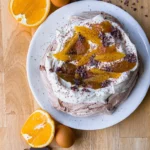 This recipe is from an amazing local chef, Fern, who celebrates the art of cooking vegetarian and vegan with the hope to inspire the chef that resides inside of all of us.
Pavlovas are a great holiday dessert but not that common for the time. They make a stunning centerpiece dessert. Mini pavlovas work well in dessert baskets too. Pretty gaudy, but that’s what the season is about. It’s something sure to impress your friends and family. Pavlovas are light but this recipe had a warm spice from the spicy orange black tea. The chocolate adds a little more depth as well. They’re light with an airy squishyness. Crisp yet flaky and soft. Pair them with a nice whipped cream, mouse, or cake, and is a party. This recipe is geared toward winter. spicy orange black tea and dark chocolate fit the brisk mood. It’s light with a touch of bitter sweet warmth.
Check out this recipe and explore Fern’s blog for more amazing recipes. https://behindferntree.com/winter-pavlova/

This time of year has an extra special meaning for Cup of Tea. It marks the anniversary of the day the teahouse opened, the 26th of November. 🎂 This year we are celebrating our 4th year! The number 4 represents the continued building of the foundation for a healthy future. I truly believe that the foundation of Cup of Tea has remained strong because of YOU! Thank you for your loyalty and your continuous championing for Cup of Tea. In honor of the number 4, we will be running 4 deals from November 25 to December 25…

The FIRST special deal for our Anniversary is a free Cup of Tea Travel Steeper. Our to-go steeper is perfect for anyone on the go. This steeper is double-walled, and has hi-temp inner glass, which means there’s no staining! The lid has a removable strainer, perfect for loose-leaf tea, and it’s incredibly easy to use! Simply fill the cup with hot water, add the loose tea to the strainer lid, secure it tightly, and turn it upside down! Once it’s been steeped long enough, turn your cup back over, and voila! A perfect cup of tea! Get your very own Cup of Tea travel steeper with every $50 purchases. PLUS, you will be entered into a drawing to win an Oregon Wild tote bag filled tea, honey, chocolates, stickers AND a private tea tasting for you and 9 other people! This deal is instore and online 11/25-11/30 (add the Libre to your card and $50 worth of loose-leaf tea, then use coupon code “librefree”)

Anniversary Deal #2: Lets begin December with a $5 coupon! 💵 For every $30 you spend, I will give you $5 off your purchase…Hey, that is like getting a free cup of tea or a free ounce of tea ☕️ Who doesn’t want somthing tea related free ? A little incentive to get you moving and get that list competed. 📝 Tony Robbins once said, “What simple action could you take today to produce momentum toward success in your life?” Okay, this coupon might not change your life, but it could be the motivation you need to not procrastic this holiday season.
This deal is instore and online 💻 12/1-12/11
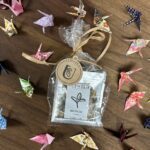
Anniversary deal #3: FREE Sampler bag with purchase! These little sampler bags house 4 different teas and one sweet paper crane that was created to add a little hope and peace to your life. This could be the perfect little add on for a teacher’s gift, perhaps the perfect nug for your buddy who is drinking to much coffee and needs to join us in the tea world, what about a stocking stuffer or even a hostess gift. Spend $50 and I will give you this adorable little bag! This deal is instore or online Deal is on from 12/12-12/18

I want to give you a $10 gift card when you purchase $50 worth of gift cards…. mix and match a couple of $5 cards for the stockings, a couple of $15 cards for those fabulous teachers, $10 card for your nail tech… this is completely up to you. 🎁 Just don’t give up at the last minute and get gift cards from You Know Who… support your local small businesses who have been trying to survive a pandemic and this jaw dropping inflation!!!
Deal is from 12/18-12/24 get it in store or online
Thank you all,
Susie

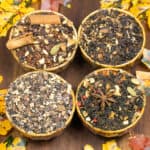 The world of chai is vast and spans centuries. With so many different ways to create chai tea, the rich history of chai, and even the amount of different chais we have in the shop, it can be difficult to know where to start. We hope this will be the perfect introduction into the chai world!
According to legend, chai was first developed when an Indian king asked for a “spiced healing beverage”. He asked for this to be created for use in Ayurvedic medicinal practices. Ayurveda is a medical system that is still used by 80% of the Indian and Nepalese population today and focuses on meditation, special diets, yoga, and more. The use of medicinal spices in Ayurveda makes sense when you consider the immense selection of spices that are native to South Asia. Cinnamon, for example, a common ingredient in chai teas, is native to India, making it a logical addition to chai “karha”.
Karha is the combination of spices used to flavor chai teas. This combination can include a variety of spices. A few examples of spices commonly used in chai include star anise, black and red pepper, cinnamon, vanilla, nutmeg, and clove. Combine any of these with a strong black tea like Assam and you’ll have yourself a nice cup of chai tea!
The meaning of the word “chai” is interesting, as well…The Hindi word “chai” actually directly translates to tea! The specific term to refer to what we know as “chai tea” is masala chai, which directly translates to mixed-spice tea. The masala chai we have in our shop is specifically a chai that features the fundamentals of what makes a chai. Because it only features the fundamentals of chai, the tea itself is very mellow compared to other chai combinations. Because of this it’s the perfect tea to use as a base to create your own chai teas using our botanical selection!
As far as steeping your chai tea goes, it can vary depending on the type of tea used in the chai. Traditionally, you’ll see black tea being used. Black tea usually steeps at around 205 degrees for 3 minutes. Sometimes you’ll see green and oolong tea used with chais. It’s actually more common to see green tea used in chai in western areas of India! Our tea Parker’s Chai is a chai that uses oolong and we recommend steeping it at 195 degrees for 3 minutes.
We also have a large variety of uniquely different chais, as well! Stumptown Chai, for example, is one of our most unique chais. It’s a white tea, which gives it a far more refreshing flavor than the more traditional black teas. It contains a variety of fruits such as pineapple, apple, and coconut, which give a sweet and silky flavor profile. Aztec Chai is another outside the box chai that has the sweet cocoa and cinnamon flavor you’d expect from a chai but with a rooibos base, instead of the classic black tea. That means that this tea has no caffeine, making it a great late night treat.
As for more traditional chais, we can easily recommend Parker’s Chai. It’s the perfect blend of rich chocolate and sweet spice. We also have Diwali Chai, that is centered around a variety of spices that you will find in a traditional chai flavors, and Tea-Juana Chai, which features all the spices you would normally find in a chai, just with an extra cocoa kick.
We hope this helps give you an introduction to chai! If you’re thirsty for more, check out our website to explore our chai selection! Or better yet, come in and try our Chai Flight, where you can try every chai we have, pick a favorite, and take some home with you!